Views: 0 Author: Site Editor Publish Time: 2026-03-02 Origin: Site


Sludge dewatering is a vital process in wastewater and industrial waste management that removes excess water from sludge to create a dense, solid cake, making disposal easier and cost‑effective. By reducing moisture, facilities cut transportation and landfill costs while improving downstream handling and regulatory compliance. Mechanical methods like centrifuges, belt presses or screw presses play a key role in this transformation, and the choice of technology depends on the sludge source, composition and water content. In this article, you will learn which sludge types are best suited for specific dewatering machines and what factors influence that suitability.
Sludge dewatering effectiveness depends heavily on solids concentration and particle size distribution. Sludge with higher solids and larger or granular particles tends to release water more readily under mechanical pressure or centrifugal force, allowing sludge dewatering equipment to produce a firmer, drier cake. When particles are small and cohesive, water becomes bound within microscopic capillaries, requiring pretreatment to aggregate particles for effective separation. Optimizing solids characteristics through flocculation enhances drainage and throughput, improving overall dewatering performance.
Sludge can be broadly divided into organic‑rich and inorganic‑rich types, and they behave differently in sludge dewatering due to water binding, particle properties, and post‑dewatering physical changes. Organic sludges often need chemical conditioning to help floc formation, while inorganic sludges tend to settle and release water more predictably during mechanical separation. Understanding these differences helps operators choose the best pretreatment and dewatering strategy.
| Category | Organic‑Rich Sludge | Inorganic‑Rich Sludge | Key Operational Points |
|---|---|---|---|
| Composition | Mainly biological solids, bacteria, residues, biodegradable organics | High mineral content, metals, sand, inorganic precipitates | Organic matter includes microbes; inorganic includes minerals and industrial particulates |
| Water Binding | Water binds tightly inside cell structures and colloids | Water is mostly free or loosely held between particles | Tight water binding in organics often needs conditioning |
| Physical Behavior | Remains granular even at low moisture; remains cohesive | Becomes powdery when dried; can generate dust if too dry | Organic sludge stays clumped; inorganic can become friable |
| Pretreatment Needs | Often requires chemical conditioning/flocculation | May require less conditioning | Flocculation helps organic‑rich sludge agglomerate for better dewatering |
| Dewatering Performance | Slower water release, lower initial separation rate | Faster settling and clearer filtrate | Inorganic particles settle faster under gravity or pressure |
| Operational Challenges | Sticky, may clog screens; conditioning helps | Dust or dryness control needed post‑dewatering | Secondary handling differs based on texture |
| End Uses/Disposal | Often recycled via compost or stabilised for reuse | Often disposed in inert landfills or reused in construction | Choice depends on composition and regulation |
| Dewatering Equipment Match | Works well with screw presses, centrifuges after conditioning | Works effectively with filter presses and centrifuges | Equipment choice optimised by material type |
tip: For organic‑rich sludges, invest in proper chemical conditioning and flocculants ahead of dewatering to improve cake solids and reduce machine wear; for inorganic sludges, monitor dust control and handle dryness to prevent handling issues after dewatering.
The consistency of sludge—including thickness, viscosity, and how well it has been conditioned—plays a key role in dewatering performance. Sludge that enters dewatering equipment already thickened and chemically treated produces better results because mechanical systems like belt presses or centrifuges work most efficiently on uniform, conditioned feed. Pretreatment steps such as polymer addition or flocculant dosing help promote particle aggregation, making water release easier under pressure or centrifugal force. This conditioning reduces cycle time, improves cake solids content, and enhances throughput consistency.
Primary sewage sludge is the by‑product of sedimentation tanks where solids settle out from raw wastewater. It typically contains a higher proportion of settleable solids and lower levels of dissolved organic matter, which enables sludge dewatering machines to extract water efficiently and produce a more solid output. Machines such as belt filter presses and centrifuges are commonly used to handle this sludge because these devices apply continuous mechanical force that squeezes out free water and produces dewatered solids with reduced handling costs.
Waste activated sludge (WAS) originates from the biological treatment phase and contains a mix of microorganisms and fine organic particles, making it more challenging to dewater than primary sludge. Its high volatile suspended solid content often requires conditioning and thickening before entering dewatering systems. Once conditioned, equipment like centrifuges or screw presses can handle this sludge effectively, producing a balanced output that is easier to transport or dispose of. Treatment plants often combine WAS with primary sludge to improve dewaterability and overall drying performance.
Many wastewater facilities blend primary and activated sludge to balance solids characteristics and improve sludge dewatering outcomes. Mixed sludge streams often contain a mix of coarse solids and fine biological matter, helping mechanical systems perform more consistently. Continuous dewatering systems like belt filter presses are well‑suited for this type of sludge because they accommodate variable feed rates and deliver stable performance. Optimizing feed balance before dewatering can raise dry solids percentages and lower disposal costs.
Sludge from chemical or electroplating industries often contains high concentrations of inorganic particles and heavy metals. These solid‑rich sludges are well‑suited to high‑pressure dewatering systems like plate and frame filter presses, which generate significant mechanical force to push water out of dense material. By capturing most solids within the press plates, this method produces a harder, drier cake compared to some continuous systems, which helps contain hazardous waste and reduce final disposal volume.
Sludge generated in pulp and paper mills is rich in fibrous cellulose and suspended solids. Its fibrous structure provides physical integrity that mechanical dewatering systems, such as screw presses or belt filter presses, can exploit to produce solid, compact cakes. These systems apply sequential squeezing or pressure that uses the fiber network to channel water away, improving moisture removal. Conditioning and optional thickening further enhance performance, enabling facilities to reduce volume and prepare solids for recycling or disposal.
Food processing and organic waste operations produce sludge that is high in organic content, moisture, and sometimes fats, oils, and greases. Screw presses work well for this category because they rely on slow, continuous pressure that gently separates water without excessive aeration or foaming. This method is particularly suitable for sticky, cohesive sludge that might challenge more rigid mechanical systems. With proper conditioning, these machines maintain stable performance and provide consistent dewatering results for organic waste streams.
Belt filter presses use two continuous belts to sandwich sludge between them while applying gravity and mechanical pressure to force water out. This configuration makes them ideal for municipal plants and industrial facilities that produce steady volumes of sludge and need continuous processing. Belt press systems are energy‑efficient, handle varying feed consistencies, and produce a semi‑solid cake that is easier to manage and dispose of. Their robust and reliable design also supports long operational runs with minimal interruptions.
Centrifuge dewatering systems spin sludge at high speeds inside an enclosed drum so that denser solids migrate outward while water is separated and discharged. These systems work especially well for sludge with fine particles or mixed composition because the centrifugal force efficiently separates solids from liquids regardless of size. Although centrifuges require higher energy inputs and maintenance, they deliver consistent dryness levels and integrate well with automated control systems in industrial settings.
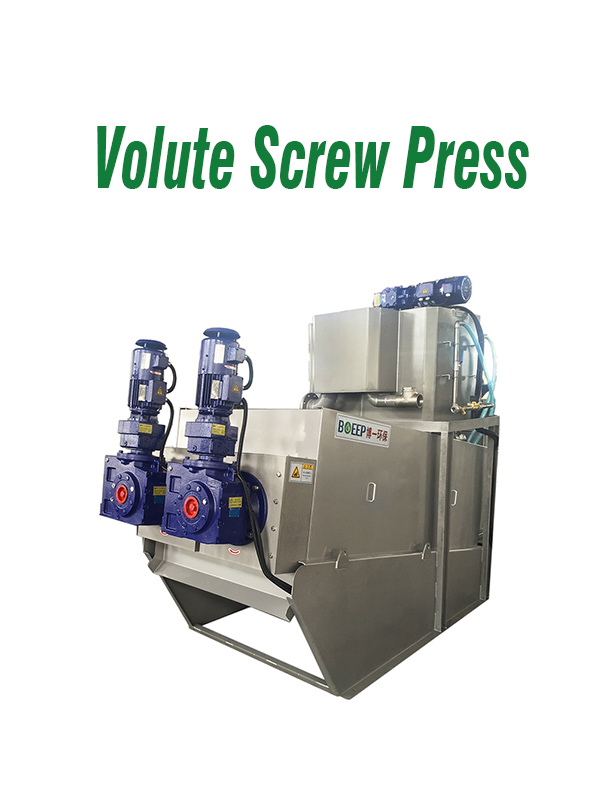
Screw presses use a rotating screw inside a cylindrical screen to compress sludge and extract water. This method is particularly effective for organic, pre‑conditioned sludge because the continuous low‑speed motion allows particles to compact gradually, reducing moisture content without requiring high force levels. Screw presses are energy‑efficient, operate quietly, and can be enclosed to control odors. These features make them suitable for food processing plants, small municipal facilities, and sites where consistent, moderate volume dewatering is needed.
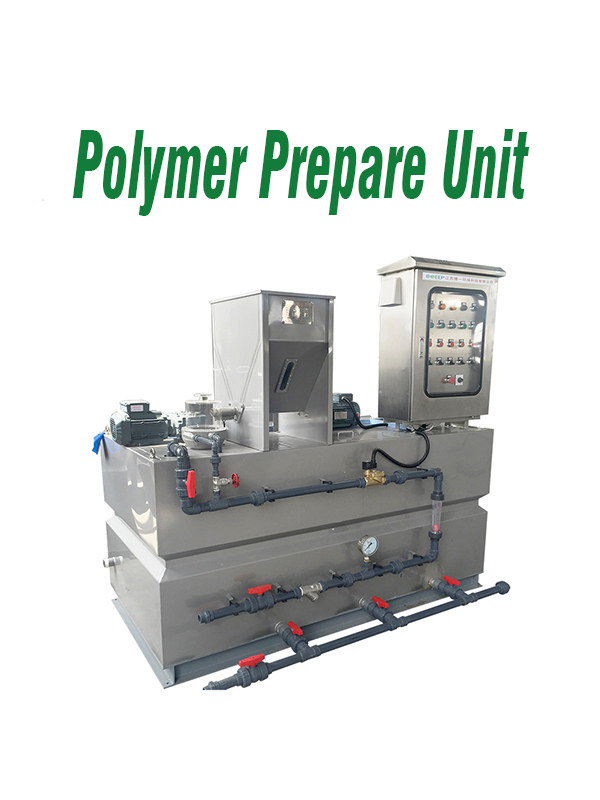
Chemical conditioning uses polymers, coagulants, or flocculants to encourage fine particles to aggregate into larger flocs that release water more readily during mechanical dewatering. This step is often essential because many sludges, especially those with high organic content, bind water tightly within microscopic structures. Effective conditioning reduces polymer consumption, improves cake solids quality, and enhances overall sludge dewatering efficiency.
Thickening is a preparatory step that increases solids concentration by removing free water before dewatering. This reduction in volume makes mechanical systems more effective, as they process denser sludge that is easier to compress and involves less energy to achieve desired dryness levels. Thickening also protects equipment by reducing wear and tear, leading to more consistent performance and lower operating costs.
Biological or chemical stabilization alters sludge characteristics by breaking down volatile organic matter or adjusting pH, which helps reduce odor and improve dewaterability. Stabilized sludge responds more predictably under mechanical stress, enabling machines like centrifuges and presses to extract water efficiently and produce more homogeneous solids. This stabilization supports regulatory compliance when preparing sludge for land application, incineration, or landfill disposal.
Operators must tune sludge dewatering equipment based on sludge properties such as solids content, viscosity, and conditioning level. Parameters like belt tension, pressure zones, or centrifuge rotational speed must be adjusted to match the feed, ensuring mechanical forces act effectively. Proper calibration helps prevent clogs, improves throughput consistency, and maintains dryness targets, enhancing operational reliability and reducing downtime.
Sludge dewatering systems must balance processing speed and final moisture content. This choice affects energy, disposal cost, and downstream handling. Below is a structured view of how throughput and dryness targets compare across key performance criteria.
| Performance Aspect | High Throughput Focus | High Dryness Focus | Technical Rationale |
|---|---|---|---|
| Goal Prioritization | Maximize sludge volume processed hourly | Minimize water content in final cake | Throughput prioritizes speed; dryness prioritizes solids concentration. |
| Typical Moisture Outcome | Higher residual moisture in cake | Lower residual moisture in cake | More water remains when speed increases; slower, targeted processing yields drier solids. |
| Energy Usage | Lower energy per ton processed | Higher energy per ton dried | Extra mechanical action or pressure is needed to squeeze out more water. |
| Equipment Settings | Faster belt or screw speeds, reduced pressure | Slower speeds, increased pressure/time | Speed and compression change water release dynamics. |
| Feed Characteristics Needed | Handles broader feed variation | Prefers conditioned, stable feed | Uniform feed helps machines achieve higher dryness reliably. |
| Output Volume | Larger quantity of wetter cake | Smaller volume of drier cake | Higher dryness reduces volume and disposal cost. |
| Cost Implications | Lower operating cost per hour | Higher cost per ton of dry solids | Dryness gain often requires more power and time. |
| Use Cases | High‑volume municipal or industrial plants | Strict disposal standards or reuse targets | Dryness matters more when disposal, reuse, or transport costs are high. |
tip: Focus on throughput when plant inflow is large or continuous; shift toward dryness targets when disposal cost, landfill rules, or reuse quality are primary drivers — this ensures optimal sludge dewatering performance and cost balance.
Regular maintenance ensures sludge dewatering equipment remains effective over time. Cleaning belts, checking seals, inspecting centrifuge bearings, and lubricating mechanical components are vital tasks that preserve performance and prevent unexpected shutdowns. Establishing a preventive maintenance schedule enhances equipment longevity, reduces repair costs, and keeps production stable, which is especially important for continuous industrial operations.
Municipal primary sludge, mixed municipal sludge and many industrial sludges work well with proper dewatering machines when matched correctly. Aligning sludge characteristics with belt presses, centrifuges or screw presses cuts disposal costs, boosts handling and meets regulatory needs. Jiangsu BOE Environmental Protection Technology CO., Ltd. offers advanced dewatering systems and pretreatment equipment that deliver stable, efficient moisture reduction and long‑term value for wastewater and industrial applications.
A: Sludge dewatering is the process of removing water from sludge to produce a concentrated solid cake, reducing disposal volume and cost.
A: Sludge from municipal, industrial, chemical, and food processing sources can be processed with dewatering machines, depending on solids content and composition.
A: Particle size, water‑holding capacity and composition influence how easily a machine separates water from solids in the dewatering process.
A: Common equipment includes centrifuges, belt presses, filter presses and screw presses, each suited to specific sludge types.
A: By lowering water content, sludge dewatering cuts sludge volume, weight and disposal costs for transport or landfill.