Pharmaceutical wastewater management forces facility operators to handle complex, high-volume sludge under strict regulatory scrutiny. Disposing of this material remains a massive operational hurdle. Pharmaceutical sludge differs entirely from standard municipal waste. It contains Active Pharmaceutical Ingredients (APIs), volatile organic compounds (VOCs), and complex biological or chemical mixtures. These characteristics make standard dewatering methods highly inefficient and drive disposal costs upward. Facilities cannot rely on generic machinery to process these aggressive waste streams. You need a highly specified industrial sludge dewatering system designed for rigorous compliance and continuous operation. This guide provides a technical framework for evaluating equipment types, optimizing upstream conditioning, and mitigating implementation risks. By understanding the mechanical and chemical variables at play, operators can drastically reduce waste volumes and ensure environmental compliance.
Sludge Characterization is Non-Negotiable: The presence of APIs, varying viscosity, and biological vs. chemical ratios dictate the required dewatering technology.
Upstream Preparation Dictates Output: Proper sludge thickening, stabilization, and mineralization are critical prerequisites for maximizing the performance of any dewatering device.
Dry Solids (DS) Concentration Drives ROI: Achieving a higher percentage of dry solids exponentially reduces transportation costs and specialized hazardous waste disposal fees (e.g., incineration).
Equipment Trade-Offs Define Strategy: Selecting between centrifuges, filter presses, or a screw screw press for pharmaceutical sludge requires balancing CapEx, OpEx, footprint, and energy consumption.
System Integration Matters: Standalone equipment fails without proper upstream conditioning, making the polymer preparation unit and automation controls critical to continuous operation.
Handling sludge contaminated with APIs, heavy metals, or residual solvents requires strict adherence to environmental regulations. These compounds directly affect sludge stability and dictate the legal classification of the waste stream. Authorities often classify pharmaceutical sludge as hazardous waste due to the risk of environmental contamination and antimicrobial resistance. This classification severely limits disposal options. Land application is generally banned, forcing facilities to rely on specialized incineration or secure landfills. Operators must contain these compounds throughout the treatment process to prevent soil or groundwater contamination. The presence of residual solvents also introduces flammability and toxicity risks. This demands specialized equipment enclosures, explosion-proof (ATEX/EX) motor ratings, and integrated ventilation systems to protect the plant environment.
Pharmaceutical wastewater treatment plants typically generate two distinct types of sludge, each presenting unique mechanical challenges. Secondary biological sludge originates from bioreactors, membrane bioreactors (MBRs), and aeration tanks. It consists primarily of cellular mass and extracellular polymeric substances (EPS). This biological matrix is highly hydrophilic; it holds water tightly within cell structures, making mechanical separation difficult. Primary chemical sludge comes from coagulation and flocculation processes, often utilizing dissolved air flotation (DAF) units or clarifiers. It contains precipitated metals, salts, and inorganic compounds. Chemical sludge generally dewaters more easily but acts as a highly abrasive compound against machinery. Dewatering mixed sludge presents a unique operational hurdle. The sticky biological components tend to blind filter media, while the chemical components aggressively wear down metal tolerances. You must analyze the exact ratio of these sludge types before selecting your separation technology.
Dry solids concentration measures the mass of solid material remaining after removing water. This metric directly correlates to overall volume reduction. Even a minor increase in DS percentage yields massive reductions in total sludge volume. Establishing a realistic DS target prevents over-engineering the system while ensuring the final cake meets the acceptance criteria of your chosen disposal facility.
Sludge Matrix Type | Primary Origin | Typical DS Target Range | Dewatering Difficulty |
|---|---|---|---|
Secondary Biological | Aeration Tanks / MBRs | 15% - 21% | High (Sticky, Hydrophilic) |
Primary Chemical | Clarifiers / DAF Units | 25% - 35% | Medium (Abrasive) |
Mixed Blend (50/50) | Homogenization Tanks | 18% - 25% | High (Variable Viscosity) |
Digested Sludge | Anaerobic Digesters | 20% - 28% | Medium (Mineralized) |
The financial viability of pharmaceutical sludge dewatering hinges on a simple mathematical reality. You must compare the cost per ton of wet sludge disposal against the cost per ton of dewatered cake. Pharmaceutical waste often requires high-temperature incineration. Excess water content drastically inflates thermal destruction costs because incinerators must burn additional fuel simply to evaporate the moisture before destroying the solids. By maximizing volume reduction through efficient mechanical pressing, facilities save substantial capital on transportation logistics and gate fees at hazardous waste processing sites.
To calculate the impact of volume reduction, operators follow a standard progression:
Determine the baseline wet sludge volume generated per day from the clarifier.
Calculate the current dry solids percentage entering the dewatering phase.
Project the final cake volume based on the target DS percentage of the new equipment.
Multiply the volume reduction by the current disposal rate per ton to find daily operational savings.
Safety and compliance form the baseline for any equipment selection. Pharmaceutical sludge processing releases aerosols, VOCs, and hazardous dust. Enclosed systems are mandatory to prevent the aerosolization of APIs and protect plant personnel from inhalation risks. Odor control requirements also play a major role in facility design. Local environmental protection agencies enforce strict emission standards for airborne pollutants. Your chosen equipment must integrate seamlessly with facility scrubber systems and negative pressure environments to maintain compliance and ensure operator safety during continuous runs.
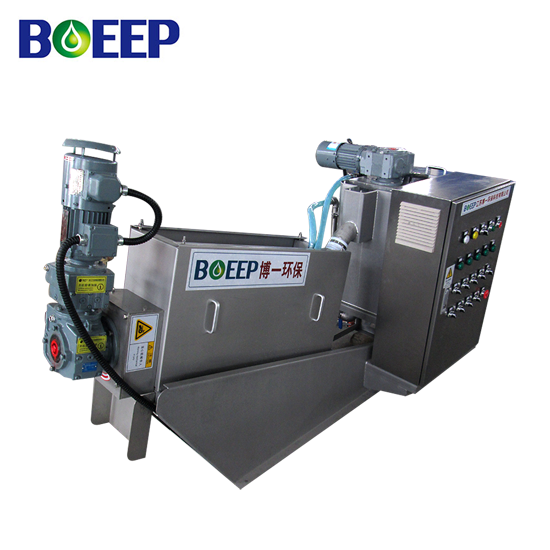
Selecting the right machinery requires a deep understanding of mechanical separation principles. No single technology fits every pharmaceutical application. You must evaluate the specific mechanisms, advantages, and limitations of each option against your facility's specific sludge matrix.
Equipment Type | Primary Mechanism | Best Application | Main Limitations |
|---|---|---|---|
Decanter Centrifuge | High-speed centrifugal force | Massive, continuous throughput | High energy use, noise, expensive maintenance |
Plate & Frame Press | High-pressure mechanical filtration | Chemical sludge requiring maximum dryness | Batch process, large footprint, labor-intensive |
Belt Filter Press | Tensioned porous belts | Non-hazardous, easily drained sludge | Prone to blinding, high wash-water demand, open design |
Screw Screw Press | Slow-moving screw with fixed/moving rings | Sticky biological mixtures, low-OpEx needs | Lower throughput per unit compared to large centrifuges |
Decanter centrifuges utilize high-speed centrifugal force to separate solids and liquids based on density differences. The feed tube introduces sludge into a rapidly spinning bowl, creating intense G-forces. The heavier solid particles pack against the bowl wall. A scroll conveyor, spinning at a slightly different differential speed, plows the solids up a conical beach toward the discharge port. The clarified liquid flows over weir plates at the opposite end. Centrifuges offer high throughput and continuous operation. Their fully enclosed design makes them excellent for controlling odors and VOC emissions. However, they draw significant electrical power to maintain rotational speeds exceeding 3000 RPM. Operators must manage substantial noise and vibration. Maintenance costs run high due to the precision balancing required for rotating assemblies and the rapid wear on tungsten carbide scroll tiles when processing abrasive chemical sludge.
Plate and frame filter presses apply high-pressure mechanical filtration through specialized woven cloth media. A high-pressure feed pump forces sludge into chambers formed by recessed plates. As hydraulic pressure builds—often exceeding 15 bar—the filtrate passes through the cloth, leaving a dense solid cake behind. This technology achieves the highest possible dry solids concentration, making it excellent for inorganic chemical sludge. Despite the superior dryness, filter presses operate as a batch process rather than continuously. They require a massive physical footprint and heavy structural supports. Cake removal and cloth washing often demand intensive manual labor, though automated plate shifters and core blowdown systems can mitigate some operator intervention.
Belt filter presses squeeze sludge between two tensioned porous belts routed over a series of rollers. The process begins in a gravity drainage zone where free water falls through the belt. The sludge then enters a wedge zone where the two belts come together to apply initial pressure. Finally, the belts wrap around decreasing diameter rollers in a high-pressure zone to shear and squeeze the sludge. These machines provide continuous operation and generally require a lower initial capital investment. Unfortunately, they struggle severely with pharmaceutical applications. The sticky nature of biological pharmaceutical sludge easily blinds the porous belts, preventing water from escaping. Operators must use massive volumes of high-pressure wash water to keep the media clean. Furthermore, the open design poses severe vapor and odor exposure risks to plant personnel, making them unsuitable for VOC-heavy streams.
A screw screw press for pharmaceutical sludge features a slow-moving screw encased within a cylinder of alternating moving and fixed rings. Sludge enters an integrated flocculation tank before overflowing into the main cylinder. In the initial thickening zone, wide gaps between the rings allow for rapid gravity drainage. As the screw pushes the sludge forward into the dewatering zone, the pitch narrows and the gap between the rings decreases. A backpressure plate at the discharge end creates the final squeeze, gradually thickening and dewatering the material in a single continuous process. The constant movement of the rings creates a self-cleaning effect that resists blinding, even when handling oily or sticky biological mixtures. This equipment operates with extremely low energy and water consumption. The enclosed operation protects workers from VOCs. While a single unit may have lower maximum throughput than a massive centrifuge, facilities often run multiple screw presses in parallel to achieve desired capacities.
Mechanical pressing represents only the final stage of the separation process. Upstream processing dictates the ultimate success of the operation. You must understand the critical difference between sludge thickening and true dewatering. Thickening removes free water to bring solids from approximately 1% up to 3-5%. Dewatering applies intense mechanical force to extract capillary water, pushing solids beyond 15%. Sending properly stabilized and mineralized sludge to the dewatering device prevents biological degradation during processing. Stabilized sludge—achieved through aerobic digestion, anaerobic digestion, or lime stabilization—releases water much more readily. This yields a significantly higher final solids content and reduces the mechanical strain on the press.
Mechanical dewatering cannot succeed without precise chemical conditioning. Pharmaceutical particles often carry negative electrical charges that cause them to repel one another, keeping them suspended in water. Flocculation neutralizes these charges and binds fine particles into larger, robust flocs. A dedicated polymer preparation unit automates the mixing, aging, and dosing of coagulants and flocculants. Whether using dry powder or liquid emulsion polymers, the unit ensures proper maturation time. This prevents unactivated polymer from passing through the system. Accurate dosing binds fine pharmaceutical particles effectively without wasting expensive chemicals or overdosing, which can hinder water release and foul the pressing equipment.
Modern pharmaceutical wastewater facilities require advanced automation. Integrating the dewatering system with plant SCADA networks allows for real-time monitoring of torque, pressure, polymer dosing, and flow rates. If the sludge gets too thick, the torque on the centrifuge or screw press increases. The PLC should automatically reduce the feed pump speed or adjust the backpressure to prevent a mechanical fault. Clean-in-Place (CIP) capabilities remain equally important. Pharmaceutical batches change, and cross-contamination poses severe regulatory risks. Automated CIP systems utilize high-pressure spray bars and chemical washes to sanitize the internal components of the press between runs, maintaining strict hygiene standards without requiring complete equipment disassembly.
Evaluating pharmaceutical sludge dewatering equipment requires a balanced look at upfront investments versus long-term operational costs over a 10 to 15-year lifecycle. High initial CapEx does not always equate to poor financial performance if the OpEx remains low. You must calculate the long-term costs of electrical energy, polymer consumption, spare parts, daily labor, and disposal transport. A cheaper machine that consumes excessive power and requires constant manual cleaning will quickly erase any initial savings. Conversely, investing in automated, low-maintenance technology yields consistent operational savings year over year.
Cost Category | Centrifuge Impact | Screw Press Impact | Filter Press Impact |
|---|---|---|---|
Electrical Power | High (Continuous heavy load) | Low (Fractional horsepower motors) | Medium (Hydraulic power packs) |
Wash Water Demand | Low (Internal flushing) | Low (Intermittent spray bars) | High (Intensive cloth washing) |
Operator Labor | Low (Highly automated) | Low (Highly automated) | High (Manual cake discharge) |
Wear Part Replacement | High (Scroll tiles, bearings) | Medium (Rings, screw flights) | Medium (Filter cloths, plates) |
Energy profiles vary wildly between technologies. Centrifuges demand high kilowatt-hour requirements to spin heavy metal bowls at thousands of revolutions per minute. This continuous heavy electrical load impacts operational budgets significantly. In contrast, screw presses utilize low-draw motors that turn at less than 20 RPM, consuming a fraction of the power. Maintenance realities also dictate technology selection. You must account for the frequency and cost of replacing wear parts. Filter cloths require frequent washing and periodic replacement to maintain filtrate quality. Centrifuge scrolls require expensive hard-facing and dynamic balancing at specialized off-site facilities. Screw press flights and rings offer long lifespans but eventually require replacement as abrasive chemical sludge wears down the metal tolerances.
Space represents a premium commodity in pharmaceutical manufacturing facilities. Retrofitting new equipment into an existing wastewater treatment plant requires careful spatial planning. Large plate and frame presses demand massive floor space and vertical clearance for plate shifting mechanisms. Centrifuges require heavy structural supports and reinforced concrete pads to dampen severe vibration and manage dynamic floor loading. Combined thickening and dewatering units, such as the screw screw press, save valuable floor space by eliminating the need for separate gravity thickening tanks. You must measure access routes, ceiling heights, and structural load capacities before finalizing any equipment selection.
Purchasing separation equipment based solely on manufacturer spec sheets invites operational disaster. Pharmaceutical sludge varies too much from plant to plant. You must conduct comprehensive on-site pilot testing using your facility's actual sludge. A pilot test verifies optimal polymer dosing rates, achievable throughput, and realistic final cake dryness. It reveals hidden challenges, such as unexpected foaming, severe abrasive wear, or blinding tendencies.
A standard protocol for on-site pilot testing includes:
Analyze the raw sludge in a laboratory to determine pH, viscosity, and biological-to-chemical ratios.
Conduct bench-scale jar testing to identify the optimal polymer type and initial dosing rates.
Connect a mobile pilot press directly to the facility's live sludge feed for real-time processing.
Run the pilot unit continuously for a minimum of five days to capture variations in the wastewater stream.
Measure the final cake dryness, filtrate quality, and actual polymer consumption to establish performance guarantees.
The success of your installation depends heavily on your chosen vendor. You must vet a sludge dewatering equipment manufacturer based on strict criteria. Look for proven experience specifically within the pharmaceutical sector. Municipal experience does not translate directly to handling APIs and complex chemical matrices. Ensure the manufacturer provides access to local field service engineers for rapid troubleshooting. Demand transparent performance guarantees tied to the results of your pilot test. Finally, verify they maintain a robust supply chain for spare parts to prevent extended downtime during critical production runs.
Installing new machinery disrupts ongoing operations if not managed correctly. Pharmaceutical manufacturing cannot halt simply because the wastewater plant needs an upgrade. Outline clear strategies for phasing in new equipment. Utilize temporary mobile dewatering units to handle sludge loads while contractors remove old machinery and pour new concrete pads. Schedule tie-ins to plant SCADA and piping networks during planned facility maintenance shutdowns. Careful project phasing ensures wastewater processing continues uninterrupted, protecting the broader manufacturing schedule.
To move forward effectively and optimize your pharmaceutical wastewater operations, execute the following steps:
Audit your current sludge generation rates and chemical composition to establish a baseline.
Calculate your existing disposal and transportation costs to build an accurate financial model.
Schedule an on-site pilot test with a specialized equipment vendor using your live wastewater feed.
Assess your facility's spatial footprint and structural load capacity for new machinery integration.
A: Thickening removes free water, increasing solids from roughly 1% to 3-5%. It relies on gravity or light mechanical separation. Dewatering applies intense mechanical force—via pressure or centrifugal action—to extract capillary water trapped within the sludge matrix. This secondary process pushes the dry solids concentration to 15%, 30%, or higher, creating a stackable cake ready for disposal.
A: The screw screw press excels at handling sticky biological sludge. Its design features alternating moving and fixed rings that create a continuous self-cleaning action as the screw rotates. This mechanical movement prevents the blinding and clogging issues that frequently plague belt filter presses, ensuring continuous operation without massive wash-water requirements.
A: It automates the precise mixing, aging, and dosing of flocculants. These chemicals neutralize electrical charges on suspended particles, causing them to aggregate into larger, robust flocs. Proper chemical conditioning maximizes water release during mechanical pressing, prevents fine particles from passing into the filtrate, and significantly increases the final cake dryness.
A: Pharmaceutical sludge contains complex organic compounds, active pharmaceutical ingredients, and variable pH levels. It often lacks proper mineralization and features higher viscosity. The cellular structure of biological pharmaceutical waste tightly binds water within extracellular polymeric substances (EPS), requiring significantly greater mechanical shear force and precise chemical conditioning to separate effectively.
A: The presence of VOCs mandates the use of fully enclosed separation equipment. Open systems release hazardous vapors into the plant environment, violating safety regulations. Enclosed centrifuges or sealed screw presses contain these emissions. They integrate directly with facility scrubber systems and negative pressure HVAC networks to protect operators and maintain environmental compliance.
A: Yes, but it requires careful operational adjustments. Operators must optimize polymer dosing and machine speed based on the specific blend ratio. Blending the two sludge types in a homogenization tank before pressing yields more consistent dewatering results. However, highly abrasive chemical sludge will accelerate wear on mechanical components compared to purely biological feeds.